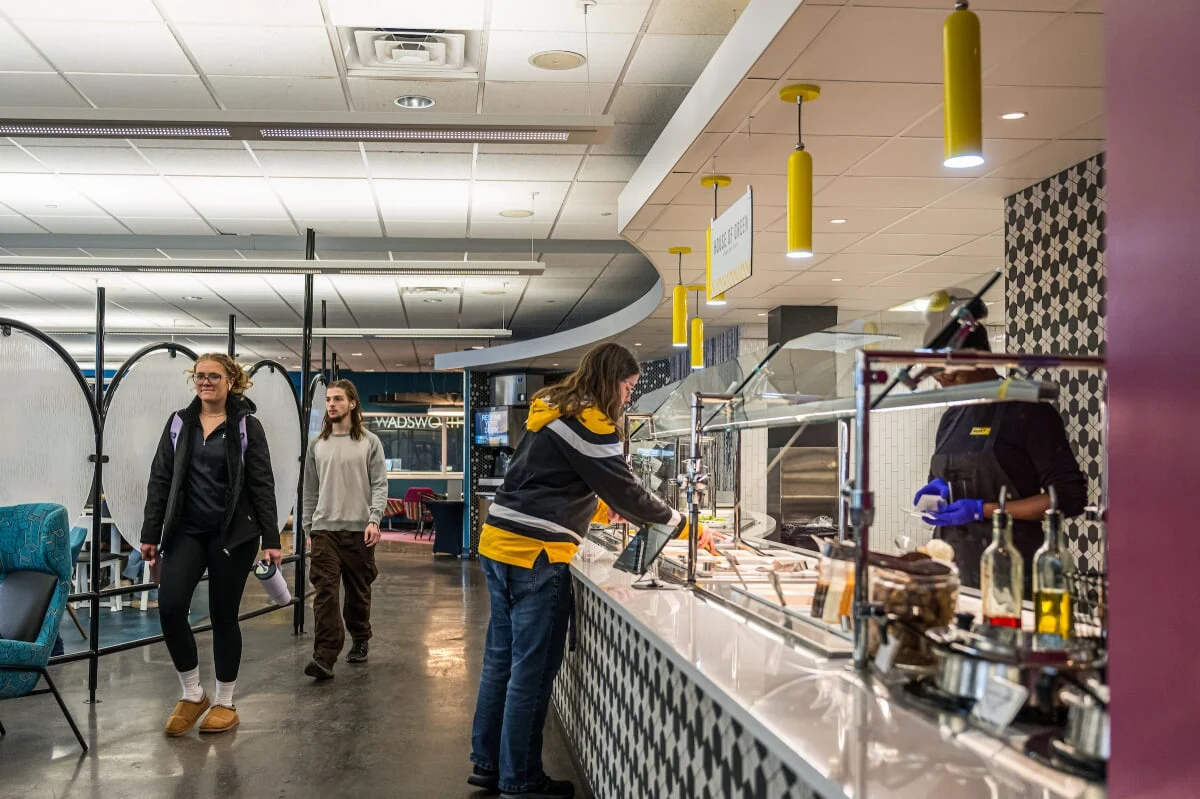
Dining halls are a staple of student life, especially for first-year students who are required to live on campus and purchase a meal plan. First-year students are offered two plans which range from $2,940 to $3,248 a semester. This cost comes with expectations from students that they will have nutritious food available to them, but some students feel their needs and expectations are not being met to the best of the school’s ability.
Miriam Froebe, a first-year Biomedical Engineering student living in Wadsworth Hall, is allergic to both pineapple and mint, and abstains from eating pork. When asked about their ability to use the dining hall as a primary food source, Froebe said, “My food restrictions have heavily impacted my ability to eat at Wads, as usually pork is the main protein at two to four of the stalls, along with the fact that many of the protein options have barbeque sauce, which often contains pineapple.” Froebe added they have had to simplify their diet to items like chicken or turkey sandwiches and dried fruit to avoid possible cross contamination.
Reino Ranta, a first-year Aerospace and Mechanical Engineering student living on campus, has Avoidant/Restrictive Food Intake Disorder (ARFID), a psychological condition which causes an afflicted person to find certain foods extremely repellant. “I’ve only eaten in the dining hall twice, but a big thing with ARFID safe foods is consistency. I find that the dining hall food is awfully inconsistent in quality, and thus I do not feel as if I’ll be adequately sustained eating there.”
This is not a new conversation among students. On Oct. 1, 2023, Harley Russell, who graduated Spring 2026, started a petition to “Refund MTU Meal Plan Money due to Inadequate Dining Hall Services” with 275 supporters. This petition included claims of raw and undercooked food being served, lack of prepared food, meal times that do not align with the majority of student schedules, and running out of items like proteins at the sandwich bar that people rely on.
When Campus Dietitian Eric Schley was asked about systems in place to ensure consistency he responded, “We use standardized recipes… Recipe compliance is a very important pillar for our service as food allergies become increasingly common. [I]f an ingredient isn’t listed in the recipe, it will not be added to the recipe.” When asked about how the content of the meals are chosen, Schley explained, “We receive a core master menu that comes in a four-week cycle. Then… Campus Executive Chef Mike Porter, the executive chefs from DHH, McNair, and Wadsworth, and I get together to break it down into meals that make sense for our campus.” Along with this, his work behind the scenes included weekly station audits, menu audits, ingredient audits, and allergen safety reminders.